In short
Multinationals choose managed offices in India because a ready floor opens in weeks rather than months, needs no fit-out capital, and lets them add or release seats as headcount changes, on shorter agreements that are easier to approve. A conventional lease still wins when headcount is large, stable and expected to stay for many years.
Key takeaways
- A managed office replaces fit-out capital and a long lease with a per-seat monthly fee.
- It suits teams whose India headcount is still being proven or changes by quarter.
- A lease can still be cheaper per seat for a large, stable team on a long horizon.
- Compare options on true cost per seat over the same horizon, not on rent per square foot.
What is a managed office, and how is it different from a lease?
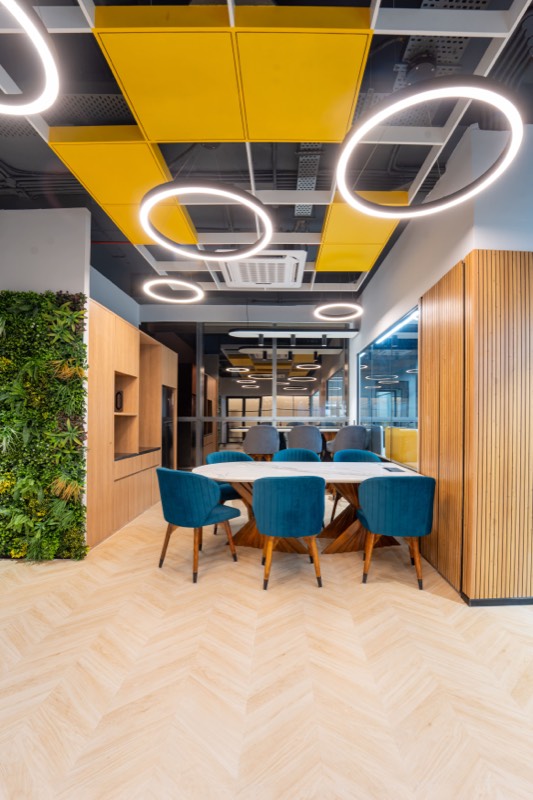
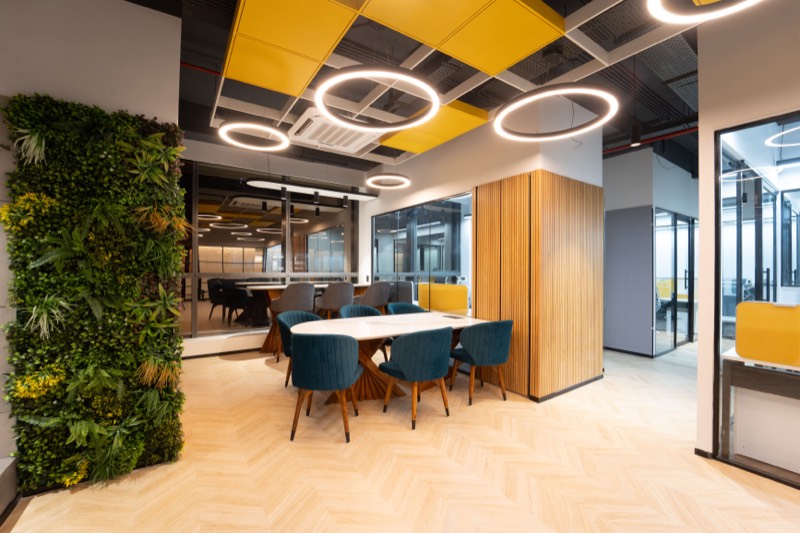
A managed office is a furnished, serviced workspace you occupy for a monthly fee per seat. The operator handles the building, internet, power backup, housekeeping and support, and you bring your people and laptops.
A conventional lease gives you bare space. You design it, build it, furnish it, staff it and then run it for the length of the term.
The difference is who carries the operating risk. In a lease you carry the vacancy, the repairs and the surprises. In a managed office the operator carries them and you pay for the seats you use.
Why are multinationals choosing managed offices for India?
India teams at multinationals often start as a plan approved overseas, with the final headcount depending on hiring and on what the group decides next year. A commitment sized for the plan, rather than for the proven team, is a risk many head offices would rather not carry.
Managed offices turn that uncertainty into a monthly line that moves with the team.
There is also a governance reason. A group finance committee can approve a small monthly seat commitment far faster than a multi-year lease with a deposit, a fit-out budget and a restoration clause.
- Speed: a ready floor can be occupied while a lease is still in legal review.
- No fit-out capital: furniture, cabling and partitions are part of the seat.
- Flexibility: seats can be added or reduced as the hiring plan changes.
- Lower management load: one invoice replaces the landlord, the facility vendor and the internet providers.
- Accounting: under Ind AS 116, agreements of 12 months or less can use the short-term exemption, but a longer agreement for a dedicated suite may still count as a lease, so ask your auditors.
What does a managed office cost for a typical team in Pune?
Pune is the useful reference because the prices are published. At ByzBay, a software team suite starts at ₹10,270 per seat per month for 6 to 30 people, a design studio at ₹10,960 for 4 to 20 people, and a private cabin at ₹10,859 for 2 to 10 people.
Worked out at those starting prices, a 30-person software team suite is ₹3,08,100 a month, about ₹37 lakh a year. A 20-person design studio is ₹2,19,200 a month, about ₹26.3 lakh a year.
For comparison only, Awfis Pune centre listings on myHQ and CoFynd in November 2026 show dedicated desks at ₹7,999 to ₹13,500 and private cabins from about ₹10,999 to ₹12,999 per seat per month, varying by centre. Always ask each operator what the seat price includes.
ByzBay’s seat prices include housekeeping, two fibre internet providers, UPS power backup and monthly meeting-room credits, the services an in-house facilities team would otherwise provide. Compare them with your lease cost after adding maintenance, power, support staff and fit-out, not with bare rent.
When does a conventional lease still win?
A lease can be cheaper per seat when you are certain of a large team for many years. At that scale, the fit-out is spread thinly and you control the space completely.
It also wins when you need a very specific build, such as a laboratory, a secure operations room or a floor with a brand identity that must not be shared with any other company.
- Headcount above a full floor, stable across the term.
- A horizon of eight or nine years, with no plan to relocate.
- Special infrastructure that a shared building cannot provide.
- A group policy that requires owned or leased premises for regulated functions.
How fast can a team actually move in?
A ready managed floor is the quickest route because there is nothing to design or build. What remains between signing and the first day is mostly administration: the agreement, access cards and app accounts.
Speed matters most when the India team has a launch date set by a customer or by the group. Every month spent in lease negotiation and fit-out is a month of hiring without a place to onboard people.
If you do need your own floor, ByzBay designs and builds any office under 10,000 sq ft in 75 days at a fixed price agreed before work starts. The planned programme is design on days 1 to 15, build on days 16 to 65, and snagging and move-in on days 66 to 75. Under ByzBay’s terms, the 75 days run from the day both sides sign off the final design and the site is handed over, and extend for changes you ask for, permits and approvals outside ByzBay’s control, and force majeure.
What should procurement check before signing a managed-office agreement?
A managed-office contract is shorter than a lease but still needs the same discipline. Ask for every clause in writing and compare it with what your group policy requires.
- What the per-seat price includes: internet, power backup, housekeeping, meeting rooms, café and support.
- Term, notice period and how many seats you can add or release, and when.
- Access control, visitor handling and data-security arrangements for your team’s area.
- The GST invoice format, so your finance team can claim input tax credit.
- A registered or business address with mail handling, if your entity needs one.
- What happens to your team’s suite if you exit part way through the term.
How should you decide between the two?
Choose on three numbers: true cost per seat over a three-year and a seven-year horizon, headcount certainty, and time to first day. Where certainty is low, the managed office wins on risk even if a lease is slightly cheaper on paper.
Revisit the decision once a year. A team that has doubled in size and stayed stable for three years may now justify its own floor, while a team that has shrunk may be better served by releasing seats.
Many multinationals use both. A managed office carries the pilot team and the early growth, and a leased or purpose-built floor follows once the headcount has proven itself.
To see a managed floor in Pune before you decide, book a site visit on byzbay.com or message ByzBay on WhatsApp at +91 8600 351 721.
Questions
Is a managed office the same as a coworking space?
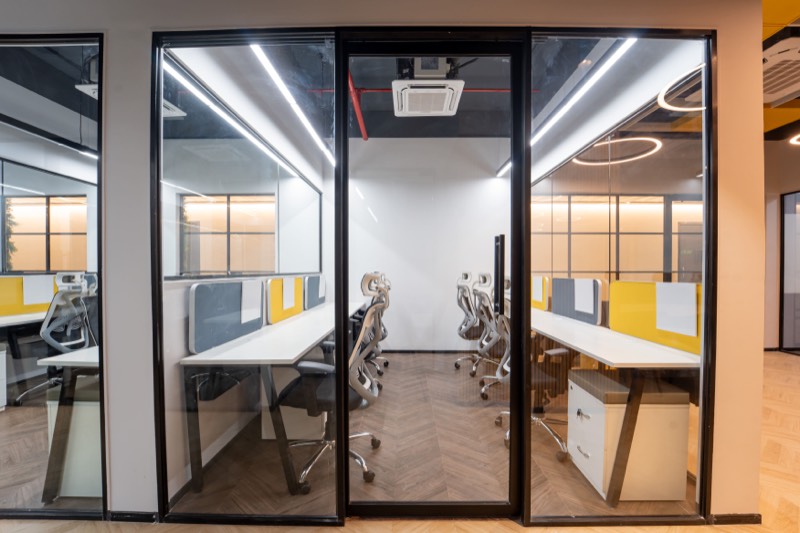
They overlap. Coworking usually means open desks and shared lounges, while a managed office gives your team a dedicated, often lockable area with the operator running the services. At ByzBay, for example, a software team suite is a lockable room for one engineering team, and a private cabin suits two to ten people.
Can a multinational use a managed office as its registered address in India?
Many operators offer a business address with mail handling, and some support registered-address use. Confirm that the agreement allows it, that the address can appear on your incorporation and GST records, and that mail and notices reach the right person. Ask your company secretary to review the wording first.
How long a commitment does a managed office need?
Terms are generally shorter than a conventional lease, and notice periods vary by operator and by space type. Ask for the term, the notice period and the rules for releasing seats in writing. Those three clauses decide how much flexibility you really get when headcount changes.
Do managed offices work for engineering teams with security needs?
They can, provided the space is lockable, access is controlled and connectivity is resilient. Look for a dedicated room, individual access cards, dual internet providers and power backup. Your information-security team should still review the arrangements against the client or group policy.
How do I compare a managed-office seat price with a lease quote?
Convert the lease into cost per occupied seat per month. Add rent, maintenance, power, parking, GST, support staff, and the fit-out and deposit spread over the years you expect to stay. Compare that figure with the all-in seat price over the same horizon, and run both at your best and worst headcount.