In short
Plan for about 1,000 W per high-end GPU workstation: NVIDIA lists 1,000 W required system power for an RTX 5090. Add cooling and UPS capacity for that load, dual fibre for dataset transfers, access-controlled space for DPDP Act duties and cloud credits for heavy training. At ByzBay Pune a software team suite starts at ₹10,270 per seat a month before GST.
Key takeaways
- Plan about 1,000 W per high-end GPU workstation and confirm circuit, cooling and UPS capacity with the operator before you bring it in.
- Cloud startup programmes publish tiers from $1,000 to $350,000, and companies that qualify for ByzBay's startup offer can also get up to $6,000 in partner credits; each partner decides eligibility and amount, so check each programme's conditions before claiming.
- On the notified DPDP timeline, the security safeguard duties apply from 13 May 2027, with penalties of up to ₹250 crore.
- Moving 1 TB takes about 2.2 hours even at a sustained 1 Gbps, so dual fibre and resumable uploads protect long dataset transfers.
- A 6-seat software team suite at ByzBay Pune costs ₹61,620 a month before GST, or ₹55,458 with the 10% startup discount.
What does an AI team need beyond a normal software team?
A software team runs on laptops, a reliable network and meeting rooms. An AI team often adds one or two GPU workstations for experiments, local inference and data preparation, and those machines change the power and heat picture. NVIDIA lists the GeForce RTX 5090 at 575 W total graphics power, 32 GB of GDDR7 memory and a required system power of 1,000 W. A tower with two such cards can draw well over 1,000 W at full load; that is an estimate from the published card ratings, not a measurement.
Almost all of that electricity ends up as heat in the room. Two workstations drawing 1,000 W each put about 2 kW of heat into the space, the same as a 2 kW room heater running continuously. Long training runs also mean sustained fan noise. Both are reasons to keep GPU towers in a closed suite or cabin rather than on an open floor, and to send the biggest jobs to the cloud.
Every ByzBay seat includes UPS backup power. Before you bring in a multi-GPU tower, give the ByzBay team the rated wattage of each machine and ask them to confirm the circuit and UPS capacity for your space; it is the same question to ask any operator. A short checklist:
- Rated wattage of every workstation and monitor you plan to run.
- How long the UPS must hold the load: long enough to save checkpoints and shut down cleanly, or longer.
- Cooling in the room during night runs, if your membership's access hours include nights.
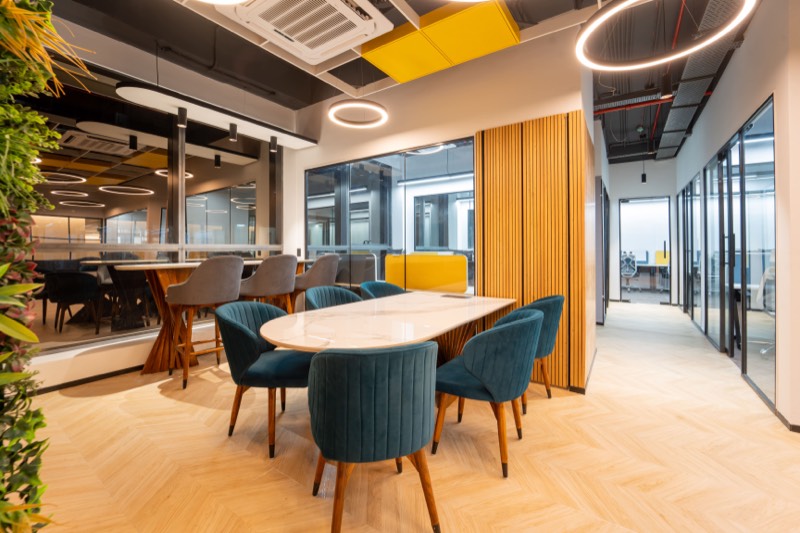
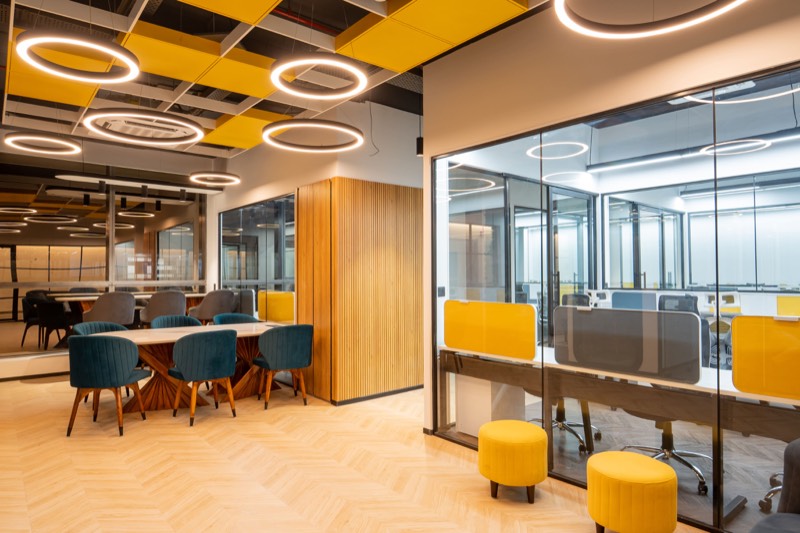
- Physical security for machines that hold data, such as a suite or cabin with access limited to your team.
Cloud or on-premise GPUs: how do startup credits change the maths?
Credits decide how far a young AI company gets before training costs come out of the bank account. The three large cloud programmes publish these tiers:
Companies that qualify for ByzBay's startup offer can also get up to $6,000 in partner credits from these three programmes; each partner decides eligibility and amount. Plan the order in which you claim credits: Google's page says applicants new to its programme should not already have received more than $5,000 in Google Cloud credits.
There is also an Indian option. A Press Information Bureau backgrounder dated 10 February 2026 states that more than 38,000 high-end GPUs have been onboarded under the IndiaAI Mission and are available at ₹65 per hour. At that rate, a fine-tuning job that keeps one GPU busy for 10 days around the clock, 240 hours in all, costs about ₹15,600. Access rules apply, so check eligibility before you plan around it.
A rule of thumb, not a formula: buy a workstation when a GPU would be busy most working hours for a year or more, and rent cloud or IndiaAI capacity when demand comes in bursts or needs more memory than one card holds.
- AWS Activate: the Founders tier starts at $1,000 for self-funded startups, with up to $5,000 for select participants. The Portfolio tier offers up to $200,000 with an Org ID from an Activate Provider such as an accelerator or VC. Startups must be pre-Series B and founded in the last 10 years.
- Google for Startups Cloud Program: AI startups with Pre-Seed to Series A funding can receive up to $350,000 over two years, covering 100% of usage up to $250,000 in year one and 20% of spend up to a further $100,000 in year two. A separate tier for bootstrapped and self-funded founders offers free access to the Gemini API in Google AI Studio.
- Microsoft for Startups: startups new to Azure get $1,000 valid for 90 days and a further $4,000 valid for 180 days after business verification. Startups referred by investors in Microsoft's network usually start at $100,000.
How do you protect training data and customer data under the Digital Personal Data Protection Act, 2023?
Parliament enacted the DPDP Act on 11 August 2023, and the DPDP Rules, 2025 were notified in November 2025 with an 18-month phased rollout. On the notified timeline, the consent manager rule has applied since 13 November 2026, and most duties, including the notice and security safeguards rules, apply from 13 May 2027. MeitY consulted in early 2026 on shortening parts of that timeline, and dates can change, so check the current position before you plan around them.
The penalties are large. Failing to maintain reasonable security safeguards can attract up to ₹250 crore, and failing to notify the Data Protection Board or affected people of a breach up to ₹200 crore. The Rules name measures such as access control, logging, detection of unauthorised access and continuity of processing, and require certain logs to be kept for at least one year.
For an AI startup, the office is part of that control set:
This is general information, not legal advice; ask a lawyer to map your data flows against the Act and the Rules.
- Keep personal data in access-controlled cloud storage, not on laptops or USB drives.
- Mask or remove personal identifiers before data enters a training set, where the use case allows.
- Work on customer data in a team suite or cabin where screens are not visible from shared areas.
- Give each person their own access card, which every ByzBay member gets, and remove office and data access on the day someone leaves.
- Log who accessed which dataset and keep those logs for at least one year.
Why do large dataset transfers need two fibre providers?
Simple arithmetic shows the exposure. Moving 1 TB at a sustained 100 Mbps takes about 22 hours; at 1 Gbps it takes about 2.2 hours. Real throughput is usually lower than the line rate, so long syncs to cloud storage often run overnight.
A single provider means a single route and a single network, so one cable cut or outage can stop an upload or a model sync partway through. Two providers on separate routes let traffic fail over and keep calls and syncs running. Pair that with resumable multipart uploads and checksums, so an interrupted transfer restarts from the last completed part rather than from zero.
Every ByzBay seat includes dual fibre and UPS backup power, which together reduce the chance that a network fault or a power cut ends a long transfer or a live demo. Whichever operator you choose, ask how failover works and whether your workstations can use a wired connection.
What does a software team suite cost, and how does the 10% startup discount apply?
A software team suite at ByzBay Pune starts at ₹10,270 per seat per month before GST. For a team of 6:
The startup offer applies to companies incorporated less than five years before they sign. A company incorporated in March 2022 that signs in December 2026 qualifies; the same company signing in April 2027 would not. The offer also includes up to $6,000 in partner credits from the AWS, Google Cloud and Microsoft startup programmes, with each partner deciding eligibility and amount.
Other layouts start at ₹10,960 per seat for a design studio, ₹10,859 per seat for a private cabin and ₹12,590 per seat for a director cabin, all before GST. Every seat includes meeting-room credits, housekeeping on a checklist with photo proof and a member app for bookings, invoices and support. GST on workspace is generally 18%, which the GST Council's rate schedule lists as 9% central plus 9% state tax under heading 9972.
The current centre, with 130+ seats, is 124% booked across day and night shifts. A new space in the same premises goes live in January 2027, and registering interest early gets up to 10% off with code EOI10.
- List price: 6 seats at ₹10,270 is ₹61,620 a month before GST.
- With the startup offer of 10% off membership fees: ₹55,458 a month before GST.
- With 18% GST on the discounted fee: about ₹65,440 a month.
Where do you run investor demos and client calls?
At ByzBay you can book a meeting room or the conference room for ₹890 an hour before GST, or use the meeting-room credits included with every seat; bookings run through the member app. A demo checklist that avoids the usual failures:
A visiting cofounder or adviser who needs a desk for a day can use a day pass at ₹590 before GST. ByzBay is at Kohinoor World Towers in Pimpri, Pune.
- Load model weights and sample data on the demo machine the day before, so nothing depends on a cold start or a large download.
- Use a wired connection if the room has one, and keep a recorded video of the demo as a fallback.
- Test the screen, audio and call link in the room 30 minutes before the meeting.
- Keep real customer data out of the demo; use synthetic or consented examples.
Questions
Can we train models on GPU workstations in a coworking office?
Yes for experiments, local inference and small fine-tuning jobs, provided the operator confirms power, cooling and UPS capacity for each machine. Long multi-GPU runs are easier to scale in the cloud or on IndiaAI Mission compute, which the Press Information Bureau lists at ₹65 per hour.
How much cloud credit can an early AI startup get?
It depends on funding and programme. Self-serve tiers start at $1,000 on AWS and Azure, investor-backed tiers reach $200,000 on AWS and $350,000 for AI startups on Google Cloud, and companies that qualify for ByzBay's startup offer can get up to $6,000 in partner credits, with each partner deciding eligibility and amount.
When do DPDP security obligations start?
On the notified timeline, the security safeguards and most other duties under the DPDP Rules, 2025 apply from 13 May 2027. MeitY consulted in early 2026 on shortening parts of the timeline, so confirm the current position with a lawyer.
Is the 10% startup discount applied before GST?
Yes. It is 10% off membership fees, which are quoted before GST, and 18% GST is then charged on the fee you pay. Six team suite seats come to ₹55,458 before GST and about ₹65,440 with GST.
How long does a 1 TB dataset upload take?
About 2.2 hours at a sustained 1 Gbps and about 22 hours at 100 Mbps. Real throughput is usually lower than the line rate, so use resumable uploads and schedule large syncs overnight.
Where can we hold an investor demo in Pimpri, Pune?
ByzBay's meeting rooms and conference room cost ₹890 an hour before GST, and every seat includes meeting-room credits that you book in the member app. ByzBay is at Kohinoor World Towers, Pimpri.
Sources
- NVIDIA: GeForce RTX 5090 specifications
- AWS Activate: startup credits
- Google for Startups Cloud Program (India)
- Microsoft Learn: Changes to the Microsoft for Startups program
- Press Information Bureau: Democratising AI in India, backgrounder (10.02.2026)
- Press Information Bureau: DPDP Rules, 2025 Notified, backgrounder (17.11.2025)
- Legal 500: DPDP Act and Rules 2025, the 2026 compliance milestones (14.08.2026)
- LKS Attorneys: Digital Personal Data Protection Rules 2025, incremental tweaks and the way ahead
- S.S. Rana & Co: MeitY plans to cut short DPDP compliance timeline (13.02.2026)
- GST Council: GST rates for services, heading 9972