In short
To set up a global capability centre in Pune, incorporate an Indian subsidiary, register for tax, check eligibility under the Maharashtra GCC Policy 2025, hire a leadership core, and start in a managed office. Move to a dedicated floor once headcount is proven. Pune sits in the policy’s Zone I.
Key takeaways
- A GCC is an in-house centre that serves its parent organisation; BPO and call-centre activity is outside the Maharashtra policy.
- Pune Metropolitan Region sits in Zone I of the Maharashtra GCC Policy 2025, which runs until 2029–30.
- Incentive eligibility depends on fixed capital investment or hiring thresholds, so read the policy before you sign premises.
- Starting in a managed office keeps capital low while leadership and first hires are in place.
What is a global capability centre, and why do companies choose Pune?
A global capability centre, or GCC, is an in-house unit in India that performs work such as technology, research, finance, human resources or analytics for its parent company. It is wholly owned and serves the parent and its affiliates rather than outside clients.
Pune combines an established technology and engineering talent base with a state policy aimed at GCCs. Cushman & Wakefield’s Q3 2026 report attributes about 65 per cent of Pune’s office leasing demand that quarter to GCCs, and the Maharashtra GCC Policy 2025 places the Pune Metropolitan Region in Zone I, alongside the Mumbai Metropolitan Region.
What does the Maharashtra GCC Policy 2025 offer?
The policy, issued in late 2025, runs until 2029–30. Operational guidelines for applications and claims were notified in August 2026, so read both with your adviser before any incentive enters the business case.
Units are classified by investment or hiring. In KPMG’s summary, a small GCC has fixed capital investment of ₹50 to 100 crore or 100 to 250 recruited employees, and the tiers rise through medium, large and mega to ultra mega, above ₹750 crore or 1,000 jobs, which gets customised incentives.
Zone I status does not mean higher rates: where incentives differ by zone, Zone II gets more. BPO units, call centres and pure sales entities are excluded altogether.
- Capital subsidy: up to 20 per cent of eligible fixed capital investment, capped from ₹10 crore for a small unit to ₹100 crore for a mega unit, paid in five instalments.
- Rental assistance, for new units only: 10 per cent of rent in Zone I and 20 per cent in Zone II for five years, capped at ₹1 crore to ₹4 crore a year by size, and not available alongside the capital subsidy.
- Payroll subsidy: 40 per cent in Zone I for employees earning over ₹1 lakh a month, up to ₹50,000 per employee for up to 100 employees, over three years.
- Electricity duty exemption for ten years, and stamp duty exemptions for units in IT parks, SEZs and STPIs.
- Planned GCC parks in Mumbai and Pune with plug-and-play space; check their status before relying on them.
What are the steps to set up a GCC in Pune?
Decide the legal and tax structure first, because it determines which incentives and contracts are available.
- Decide the scope: which functions, which headcount in year one and year three, and which reporting line.
- Incorporate an Indian subsidiary through the Ministry of Corporate Affairs’ SPICe+ form, which also allots PAN and TAN, then open bank accounts.
- Register for GST and for the labour and shop-establishment requirements that apply to your team.
- Agree intercompany service agreements and transfer-pricing documentation with your tax advisers.
- Check incentive eligibility against the Maharashtra policy before committing to premises or hiring plans.
- Appoint the India head and a small leadership core, then start hiring.
- Set up payroll, benefits and the compliance calendar before the first offer letters go out.
- Agree the data-security and access rules your group requires, and write them into the office brief.
Where should the first team sit while the GCC is being built?
Premises decisions made in month two often constrain the next five years. A small, flexible start gives the leadership team time to learn what the centre actually needs.
The first six to twelve months are the most uncertain: hiring pace, team size and even scope can change once the group sees early results.
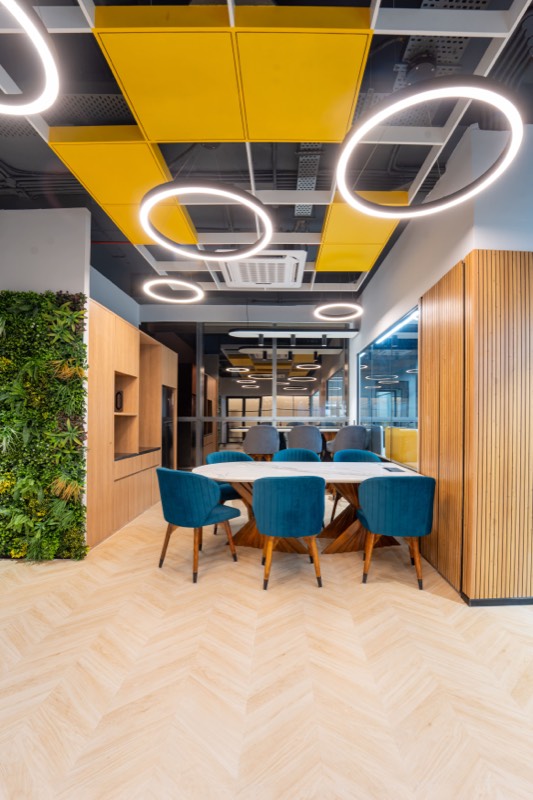
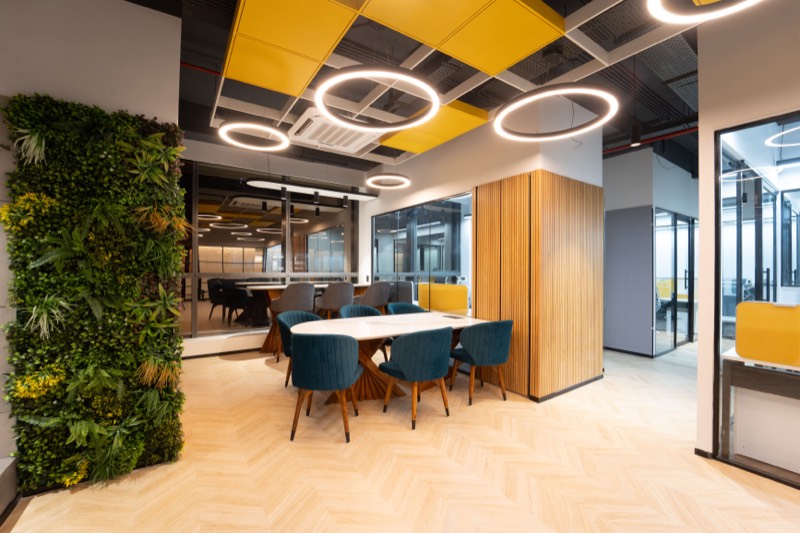
Starting in a managed office removes the largest early capital cost, because the fit-out, furniture, internet and housekeeping are already in place. In Pune, a software team suite at ByzBay starts at ₹10,270 per seat per month for 6 to 30 people, so a 20-person founding team is from ₹2,05,400 a month.
When should the GCC move to a dedicated floor?
Move when headcount is predictable, when security or brand needs exceed what a shared building offers, or when your cost per seat on a dedicated floor falls below the managed-office price. Test that last point with a full cost model, not with rent alone.
If you build your own floor, ByzBay designs and builds any office under 10,000 sq ft in 75 days at a fixed price agreed before work starts. Under ByzBay’s terms, the 75 days run from the day both sides sign off the final design and the site is handed over, and extend for changes you ask for, permits and approvals outside ByzBay’s control, and force majeure. Larger floors need a longer plan, so start the real-estate search well before the managed-office term ends.
- Headcount has been stable for two or more quarters.
- Security, data or brand requirements need a floor of your own.
- A full cost-per-seat model favours a dedicated floor over your planning horizon.
- You have confirmed how the incentive conditions interact with your lease or fit-out.
What should the office include for a GCC engineering team?
Engineering teams are sensitive to connectivity, power and space for collaboration. Specify these before you compare prices.
Ask each operator to show the room, not only to describe it, and test the internet during a working day. A short visit saves the cost of a second move.
- Two independent internet providers and power backup at every desk.
- A lockable room for the team, so clients and group security reviews are straightforward.
- Whiteboard walls and meeting rooms for design reviews and stand-ups.
- Access hours that cover your overseas time zones, written into the agreement, because GCC teams often work late or early.
- Room to grow by a defined number of seats without another move.
How can you make the first ninety days useful?
Agree the first ninety days as a plan of three deliverables: an incorporated and registered entity, a leadership core in seats, and a documented office decision. Everything else can wait until these exist.
Assign one owner for each deliverable and review progress every two weeks with the India head and the group sponsor. Decisions on premises, hiring and incentives affect each other, so keep them in one conversation.
If you want to see a Pune software team suite before you decide, book a site visit on byzbay.com or message ByzBay on WhatsApp at +91 8600 351 721.
Questions
Does every GCC in Maharashtra get incentives?
No. Incentives under the Maharashtra GCC Policy 2025 depend on the unit’s size category, its investment or hiring, the zone and the policy’s conditions. BPO units, call centres and pure sales entities are excluded. Check eligibility against the operational guidelines with your advisers before relying on any incentive.
Is Pune in Zone I or Zone II of the GCC policy?
Pune Metropolitan Region is in Zone I, together with the Mumbai Metropolitan Region. Zone II covers the rest of Maharashtra. The zone changes the rate of some incentives, so check which one applies to your specific premises and read the policy text for the exact definitions.
Can a GCC start without its own office?
Yes. Many GCCs start with a small team in a managed office while the entity, leadership and hiring plan are put in place. Confirm that the agreement allows your team to use the address for your registrations, and that it supports the security requirements of your group.
How is a GCC different from outsourcing?
A GCC is owned and run by the parent company and serves only the parent and its affiliates. Outsourcing hands work to a third-party vendor that serves several clients. A GCC gives more control over talent, data and quality, but the parent carries the cost, hiring and management load.
How much capital does a GCC need to set up its office?
That depends on seats and on the route. A conventional lease needs deposit, fit-out and furniture before day one, while a managed office replaces that capital with a monthly fee per seat. Build a three-year cost per seat for each route before choosing, and include incentive conditions.