In short
For most companies entering the EU, coworking is the right first step, a managed office suits a settled team that needs privacy and control, and your own lease makes sense only once headcount and revenue are proven. Match the office to your certainty: the less certain the plan, the shorter the commitment should be.
Key takeaways
- The three options trade commitment for control: coworking is the most flexible, a lease the most committed.
- Your choice of country matters more than the office type, because registration and address rules differ across member states.
- According to Germany Trade and Invest, a GmbH needs a German business address and a local representative, whichever office type you pick.
- Compare total monthly cost, including fit-out, deposits, services and exit costs, not just rent per desk.
- Start flexible, and convert to a lease when your headcount has been stable for a few quarters.
What are the three office options for entering the EU?
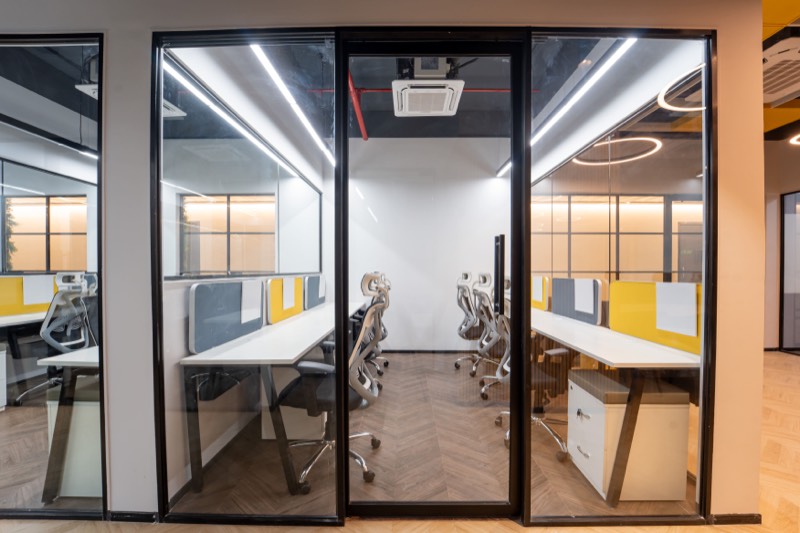
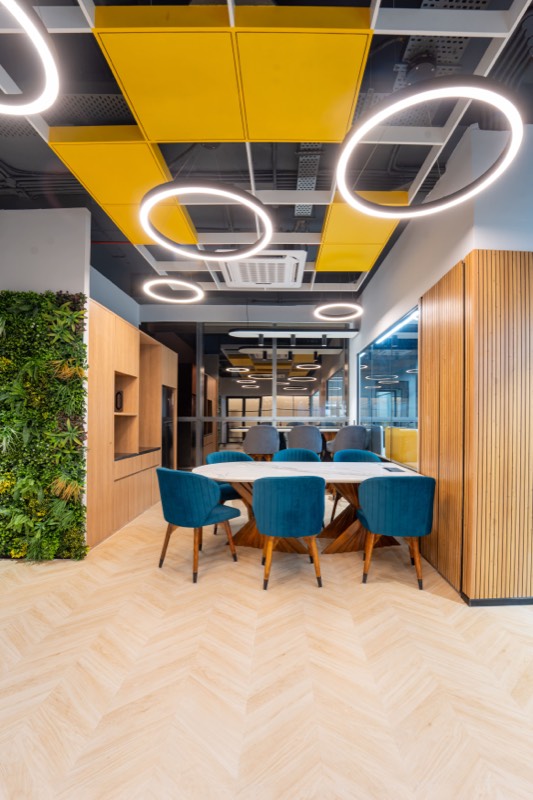
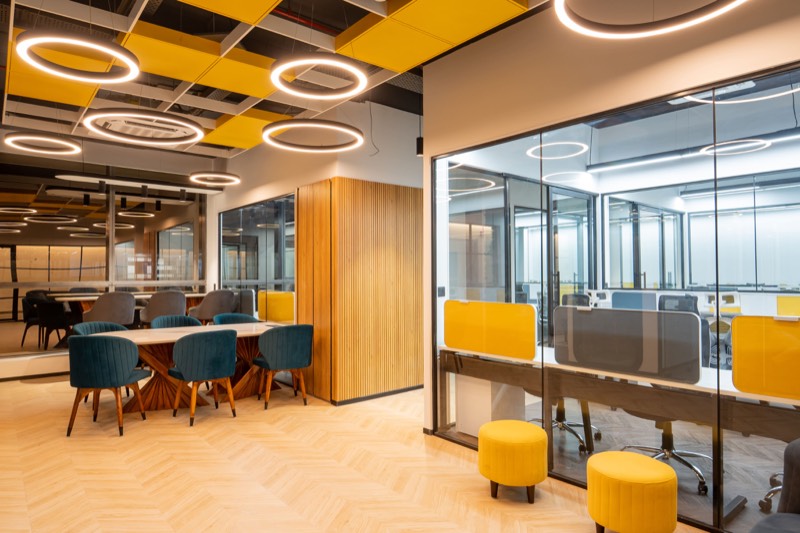
Coworking gives you a desk or a small room in a shared centre, on a short, flexible contract. A managed office gives you a private, lockable space that the operator furnishes and runs, usually for a defined term. Your own lease means you rent the premises directly, fit them out and run them yourself.
The right one depends less on the building than on how sure you are about your headcount, your customers and your timeline.
A fourth path exists in practice: combine them. Some companies run a coworking base for sales and a managed or leased space only for the group that needs privacy.
How do the options compare?
Think in terms of commitment, speed, control and who carries the operating burden.
- Coworking: weeks to start, short terms, shared facilities, least control over the space.
- Managed office: a private space with your branding, with the operator handling services and upkeep, usually a longer term than coworking.
- Own lease: most control and often a lower cost per desk at scale, but the longest commitment, a fit-out budget and your own facilities management.
What does the country choice change?
Every EU member state runs its own registration process, and the EU’s Your Europe portal warns that registration, permit and licensing requirements can be very different from one country to the next. The office decision follows from the country choice, not the other way round.
Take Germany as an example. Germany Trade and Invest states that a GmbH needs minimum share capital of €25,000, with €12,500 paid in at registration, a German business address and a local representative. Whatever office you choose, it must give you an address that your registration, your tax authority and your customers will accept.
What should I compare beyond the monthly price?
A lease that looks cheapest on rent can be the most expensive once you add fit-out, furniture, deposits, utilities, cleaning, internet and the legal cost of exiting early. A coworking seat that looks expensive may include most of those.
Build the comparison over 24 months, and include the cost of being wrong. If your team is half the planned size after a year, which option hurts least?
Ask each operator or landlord for a written quote against the same headcount, so the numbers can be set side by side.
- Contract term, notice period and renewal price.
- Deposit, setup fees and any fit-out cost.
- Internet, cleaning, utilities and meeting-room use.
- Whether the address can be used for company registration.
- Cost and time to add or release desks.
When does each option make sense?
Use headcount and certainty as your guide rather than company size. A large company with an unproven EU market should still start small.
Revisit the choice every six months, and write down the trigger that would make you move, such as a steady headcount or a signed anchor customer.
- Up to a handful of people, market unproven: coworking.
- A team that needs a private room, data security or a branded space, and a plan for 12 months or more: managed office.
- A stable team, proven revenue and a long-term plan in one city: your own lease.
- Multiple small teams across several countries: coworking in each, then consolidate.
How does this look from the India side?
ByzBay runs coworking and managed offices in Pune, and the same logic applies there. A dedicated desk starts at ₹9,590 per seat per month, a private cabin at ₹10,859 and a software team suite at ₹10,270. Whole floors are priced on request.
If you outgrow serviced space, ByzBay designs and builds any office under 10,000 sq ft in 75 days at a fixed price agreed before work starts. That is the India-side equivalent of the lease-and-fit-out step, with the price known upfront. Under ByzBay’s terms, the 75 days run from the day both sides sign off the final design and the site is handed over, and extend for changes you ask for, permits and approvals outside ByzBay’s control, and force majeure.
How do I take the next step?
Book a site visit to ByzBay in Pune on byzbay.com, or message ByzBay on WhatsApp at +91 8600 351 721, and ask how a flexible centre compares with a managed floor for your team size. If your EU office will be in Berlin, ByzBay designs and runs offices for teams there.
Questions
Is coworking acceptable as a registered business address in the EU?
It depends on the country and the operator. Some operators allow their address to be used for registration and some do not. Ask for written confirmation, and check with your local notary, lawyer or tax advisor, because the registered address appears in public records and your tax registrations will rely on it.
How long does it take to open an EU office?
Coworking can be ready in days or weeks once the contract is signed. A managed office usually takes longer, because the space is often prepared to your specification. A lease with fit-out takes the longest. Company registration is a separate track and often sets the pace, so run both together and ask advisors for realistic timelines.
Can we start with one person in the EU?
Yes, many companies do. A single representative can use coworking, meeting rooms and a business address while the entity is set up. Take advice on employment, tax and permanent establishment risk first, because activity by even one person in a country can create obligations for the parent company.
Which EU country should we choose first?
Choose by customer proximity, talent and regulation, not by office price alone. If you choose Germany, a GmbH needs €25,000 of share capital, with €12,500 paid in at registration. Other countries have different structures, so compare registration rules, tax and language needs before committing to a city.
When should we move from coworking to our own lease?
Consider a lease once your headcount has been steady for several quarters, you need space no shared centre can offer, and your cost per desk at scale is clearly lower. Check the exit terms and the fit-out cost first, because a lease is the hardest option to reverse.