In short
Build the team around the overlap window. India is 4.5 hours ahead of Berlin in winter and 3.5 hours ahead in summer, which leaves five and a half to six and a half shared hours on typical office days. Keep meetings inside that window and write everything else down, so work continues when the other office is offline.
Key takeaways
- India does not observe daylight saving, so the gap changes twice a year: 4.5 hours in winter and 3.5 hours in summer.
- With a 09:00 to 18:00 Berlin day and a 10:00 to 19:00 Pune day, shared hours run from 13:30 to 19:00 India time in winter and 12:30 to 19:00 in summer.
- Write decisions down, so that nobody waits half a day for context.
- Give both offices the same basics: fast internet, a good meeting room and a place for focused work.
- Review the meeting schedule each time the clocks change in Europe.
How big is the time difference between Pune and Berlin?
India Standard Time is UTC+5:30 all year. Berlin is on UTC+1 in winter and UTC+2 in summer, and in 2026 the clocks moved forward on 29 March and back on 25 October.
So the gap is 4.5 hours in winter and 3.5 hours in summer. Because India never changes its clocks, a recurring meeting fixed in German time moves by an hour in Pune on each change date, and one fixed in India time moves by an hour in Berlin.
How many hours do the two offices actually share?
Assume a Berlin working day of 09:00 to 18:00 and a Pune day of 10:00 to 19:00. The shared window is the late afternoon in Pune and the morning to early afternoon in Berlin.
- Winter: Berlin 09:00 equals 13:30 in Pune, so the overlap runs from 13:30 to 19:00 India time, about five and a half hours.
- Summer: Berlin 09:00 equals 12:30 in Pune, so the overlap runs from 12:30 to 19:00 India time, about six and a half hours.
- Berlin’s late afternoon has no Pune cover unless someone in India starts late.
- Pune’s morning has no Berlin cover unless someone in Berlin starts early.
How should the working day be structured?
Treat the overlap window as scarce and expensive. Use it for decisions, reviews, planning and anything that needs a conversation, and keep deep work for the hours that only one side is online.
A simple pattern works well: Pune does focused work in the morning, both teams meet in the overlap, and Berlin closes the day with a short written summary for Pune to read the next morning.
- One daily stand-up of 15 minutes in the overlap. Fix it in either India time or German time, and say which, so it shifts only when you intend it to.
- A weekly planning and review session in the overlap, where both leads attend.
- A written end-of-day note from each side: what is done, what is blocked, what is next.
- Rotate the awkward calls, so the same people are not always early or late.
Which tools and habits keep it feeling like one team?
The tools matter less than the habits. A team that writes clearly and records decisions loses little to the time gap, whatever chat, tracker or document tool it uses.
- Write first: specs, decisions and handovers go in a shared document, not only in a call.
- Name an owner for every task, in one tracker that both offices use.
- Record meetings and share notes, so the person who was asleep has the same context.
- Agree response times: what needs an answer in an hour and what can wait until tomorrow.
- Hold one shared on-call or escalation rota, with the handover time written down.
What should each office provide?
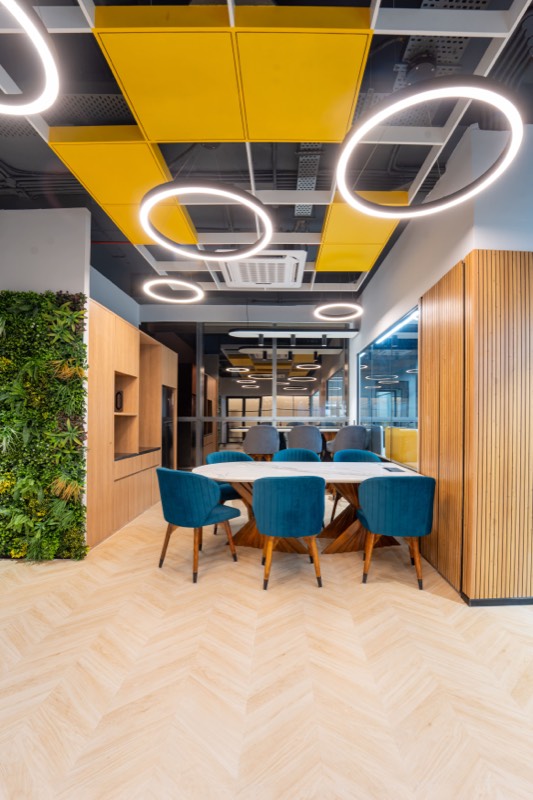
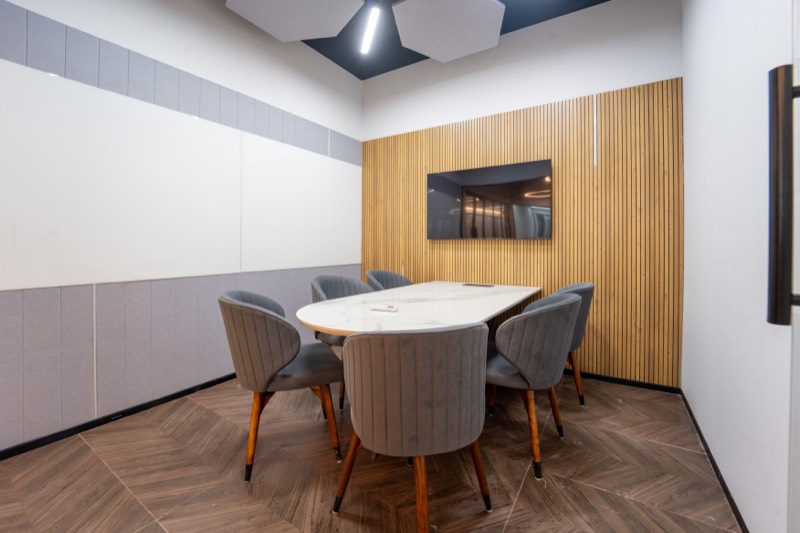
Both offices should offer the same minimum: a meeting room with good video, a quiet area for calls, and internet that does not fail during the overlap window. A weak connection in either city costs you the most valuable hours of the day.
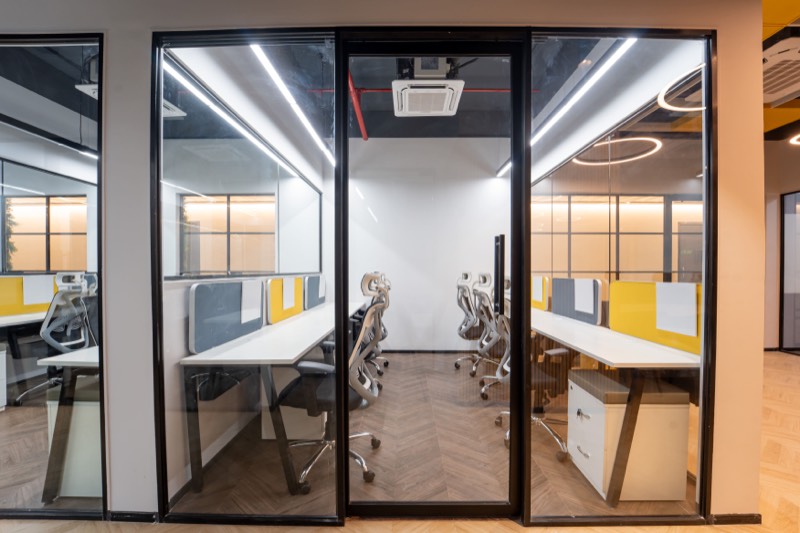
At ByzBay Pune, every seat includes dual fibre, UPS backup power, meeting-room credits, housekeeping on a checklist with photo proof, a member app for bookings, invoices and support, and your own access card; access hours are set by the membership and stated in the agreement. If incidents or late calls with Berlin run past the usual hours, put the hours you need into the agreement.
What does the Pune side cost?
Prices are starting prices per seat per month. A software team suite starts at ₹10,270 per seat and suits 6 to 30 people, with a lockable room for one engineering team, dual fibre and UPS on every desk. Ten engineers in a suite come to ₹1,02,700 a month, or ₹12,32,400 a year, before GST.
A dedicated desk starts at ₹9,590, a design studio at ₹10,960 for 4 to 20 people, and a private cabin at ₹10,859 for 2 to 10 people. ByzBay has no seats in Berlin, but it designs and runs offices for teams there.
Where can I see how this works in practice?
Book a site visit to ByzBay in Pune on byzbay.com, or message ByzBay on WhatsApp at +91 8600 351 721, and bring your team size and meeting schedule.
Questions
What is the best meeting time for Pune and Berlin?
The strongest slot is late morning in Berlin, which is early to mid afternoon in Pune. Berlin 11:00 is 15:30 in Pune in winter and 14:30 in summer. Avoid Berlin evenings and Pune early mornings, and rotate the inconvenient slot so one office does not carry the burden permanently.
Does India change its clocks when Europe does?
No. India observes India Standard Time, UTC+5:30, all year and has no daylight saving. Germany changes on the last Sundays of March and October, so the gap moves between 3.5 and 4.5 hours. Calendar tools handle the shift, but check recurring invites in the week of each change, because a meeting fixed in one zone moves in the other.
How do we avoid the Pune team always working late?
Set shared hours in advance, rotate who takes the early or late calls, and keep most meetings inside the overlap. Give Berlin the habit of sending clear written context before it signs off, so Pune is not waiting for a call to start work. Protect focus time on both sides.
Should both offices have the same setup?
They should match on the essentials: reliable internet, a bookable video-ready meeting room, a quiet corner for calls and a consistent process for access and support. Matching furniture matters less. The overlap window is short, so a failed call in either city is expensive.
How big should the Pune team be before it needs its own suite?
There is no fixed number. If the team shares sensitive code, runs long focused sessions or needs a room it can lock and decorate, a private suite starts to pay off. At ByzBay, a software team suite is designed for 6 to 30 people, and smaller teams can use cabins or dedicated desks.