In short
A software team needs three things from an office: uninterrupted power, a resilient network and enough quiet for deep work and calls. In practice that means UPS backup at every desk, two independent internet providers, wired connections for heavy builds, and a lockable room so standups and focus time do not compete.
Key takeaways
- Power: UPS backup on every desk, and on the networking equipment, keeps builds and calls running through a grid cut.
- Network: two independent fibre providers are more resilient than one large connection, because a fault usually hits one provider at a time.
- Quiet: a lockable team room separates standups and calls from focus time.
- Security: access cards and lockable space matter when you hold customer code and data, and Indian rules on incident reporting and personal data raise the stakes.
- Test all of it on a site visit with a speed test, a video call and a direct question about power backup.
Why does power matter so much for engineers?
A laptop has a battery, but the router, switch, monitor and docking station on the desk do not. When the grid drops, the network usually goes down first, and with it your calls, your git pushes and your CI runs.
So the useful question is not whether a building has backup, but what stays powered and for how long. A short gap between mains and a generator can still reboot networking gear and drop every connection.
Ask what happens if the power drops during a call. If the answer is a pause of a few seconds followed by every device reconnecting, your team will lose real time each time it happens.
- Ask whether UPS covers every desk or only common areas.
- Ask whether the router and switches sit on UPS as well.
- Ask how long the UPS runs on battery and what supplies power after that.
- Count sockets: a laptop, an external monitor and a phone charger per person is a realistic minimum.
- Ask how often the backup is tested, and who is on call when it fails.
What kind of internet does a software team actually need?
Resilience matters more than headline speed. Two independent internet providers mean that when one has a fault, traffic can move to the other, which a single large pipe cannot offer.
Engineers also care about upload speed and latency, not just download speed. Pushing container images, joining video calls and syncing large repositories all lean on upload, and latency to your cloud region decides how responsive remote environments feel.
Support matters as much as hardware. Ask who you contact when the internet is slow and whether faults are logged, because a clear ticket process shortens every outage.
- Ask how many independent providers serve the floor and whether failover is automatic.
- Run a speed test at 10 am and again at 4 pm, and note upload as well as download.
- Ping the cloud region you actually use, and test a large image pull.
- Join a video call with three or more people and watch for dropped frames.
- Ask whether wired ports are available for build machines and test devices.
- Ask what the centre does about a firewall, guest network separation and VPN use.
How quiet is quiet enough for deep work?
Engineering work alternates between focus and conversation, and an open floor makes the two fight. A calls-heavy colleague next to someone debugging a race condition costs both of them.
A lockable team room solves much of this by keeping your own noise inside it. Pair it with bookable meeting rooms for client calls, so that sales conversations happen away from the desks.
Different engineers need different amounts of silence. A team room for collaboration plus bookable rooms for calls lets people choose what they need on a given day.
- Visit at peak hours, not on a quiet Sunday.
- Check whether phone booths or meeting rooms are available for calls.
- Look for a whiteboard wall so design discussions have a place that is not a desk.
- Ask how the centre handles noisy visitors and events on the same floor.
What about security for source code and customer data?
Your clients may ask where your code is written and who can walk past it. A private lockable room, individual access cards and a clear visitor process answer most of those questions in a sentence.
Indian rules raise the stakes. CERT-In’s directions of April 2022 require body corporates to report specified cyber incidents within six hours of noticing them and to keep ICT system logs for a rolling 180 days within India, and the Digital Personal Data Protection Act allows penalties of up to ₹250 crore for failing to keep reasonable security safeguards on personal data.
The DPDP Rules, notified in November 2025, phase in most obligations over eighteen months, so ask your counsel which duties already apply to you. If a client demands a particular certification or audit, ask the centre directly and get the answer in writing.
Plan for laptops that leave the building as well. Agree rules for locking screens, using a company VPN and storing hardware overnight, because a good room will not help if a laptop is left on a café table.
- Individual access cards, with the access hours engineers need for deadlines and time zones written into the agreement.
- A lockable room for the team, rather than a shared open floor.
- A visitor process that does not route guests through your work area.
- Mail handling and a business address so deliveries never arrive at the desk.
How should you size the room for your team?
Count your team as it will be in twelve months, not as it is today. A room that fits eight people is cramped at ten, and moving teams mid-project costs more than a few empty seats.
Leave space for hardware as well, such as test devices, a second monitor per person and a shelf for equipment. Ask whether the room is yours alone, because a shared room cannot hold a whiteboard full of an unreleased architecture.
- For up to five people, dedicated desks or a private cabin usually fit.
- For six to thirty engineers, a suite designed for one team is the better match.
- For design-heavy work, ask about daylight, large-format screens and a review corner.
What else belongs on a software team’s office checklist?
The basics around the desk matter as much as the headline features. One app for bookings, invoices and support tickets takes routine admin off an engineering manager’s plate.
Housekeeping is easy to overlook, but a clean floor affects how people feel about coming in. A zone checklist with photo verification is a simple way to see that the basics are done.
Room to grow matters too. If you are six people today and expect to be twenty in a year, a suite that holds 6 to 30 people lets you add desks without relocating mid-quarter.
How do you test an office on a site visit?
Treat the visit like a short load test. Bring a laptop and a colleague, and run the checks below in 30 minutes.
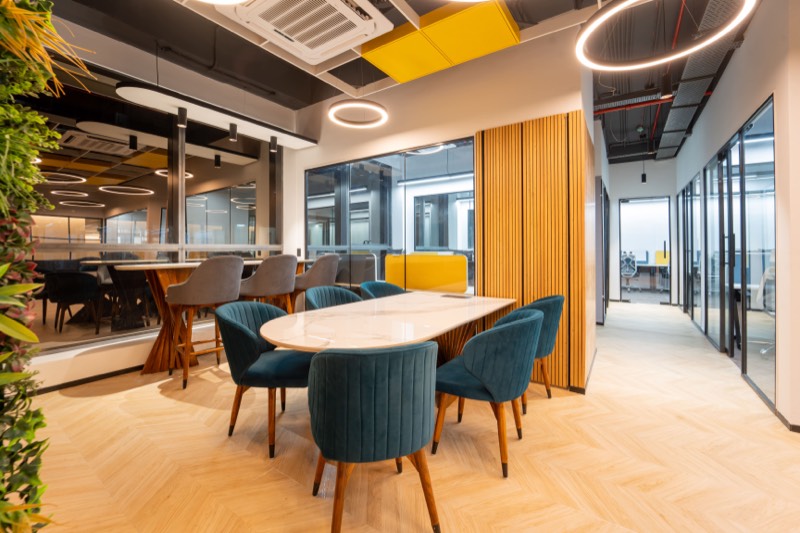
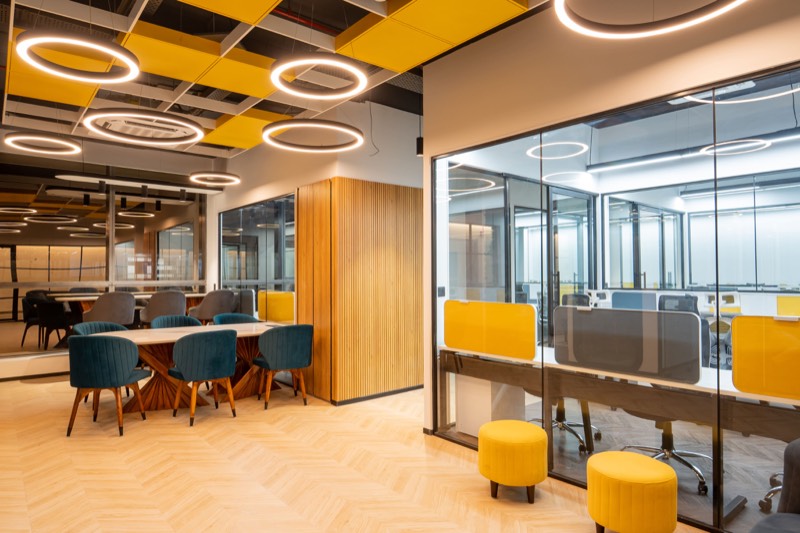
ByzBay’s software team suite is a lockable room for one engineering team with dual fibre, UPS on every desk and a whiteboard wall, from ₹10,270 per seat per month for 6 to 30 people. If you would like to run these checks yourself, book a site visit on byzbay.com or message ByzBay on WhatsApp at +91 8600 351 721.
- Speed test, upload and download, and a ping to your cloud region.
- Three-person video call from three different desks.
- Ask to see the UPS arrangement for the desks and the network equipment.
- Stand in the room during a busy hour and listen.
Questions
How many internet providers should a coworking space have?
At least two independent providers is a sensible target for a software team, because an outage usually hits one provider at a time. Ask whether failover is automatic and whether it has been tested. ByzBay seats include two fibre internet providers plus UPS power backup, which you can check with your own speed test during a visit.
Is coworking Wi-Fi fast enough for builds and video calls?
It depends on the centre, so measure rather than assume. Run speed tests for upload and download at two different times, ping your cloud region, and hold a multi-person video call. For heavy builds, ask for wired ports. A centre with two fibre providers and managed networking usually handles an engineering team comfortably.
Do software teams need a private room?
Not always, but it helps once a team passes four or five people. A lockable room keeps standups, pairing and calls away from colleagues in focus mode and gives you a safer place for confidential work. ByzBay’s software team suite is a lockable room for one engineering team of 6 to 30 people.
Can my engineers work at night or on weekends?
Yes, if the agreement allows the hours you need. At ByzBay every seat includes your own access card, and access hours are set by the membership and stated in the agreement, so get release nights, on-call rotations or time-zone work written in. Check building rules for late hours, and confirm that power and internet backup apply at night as well.
What does a software team suite cost in Pune?
A seat in ByzBay’s software team suite in Pune starts at ₹10,270 per month for teams of 6 to 30 people. A dedicated desk starts at ₹9,590 and a private cabin at ₹10,859 per seat. Companies incorporated in the last five years get 10% off after a check of the incorporation certificate, which brings a suite seat to ₹9,243, plus up to $6,000 in partner credits from AWS, Google Cloud and Microsoft, where each partner decides eligibility and amount.