In short
Before your first hire, sort five things: a registered business address, the tax and statutory registrations that apply to you, a business bank account, a workspace with reliable internet and power, and written employment paperwork. Confirm the details with your chartered accountant, because registration rules depend on your state, turnover and business type.
Key takeaways
- Settle your registered address first, because registrations and contracts ask for it.
- For a services business, GST registration becomes compulsory above ₹20 lakh of turnover in a financial year, or ₹10 lakh in special-category states.
- In Pune, a ByzBay virtual office from ₹560 a month covers the address, and a dedicated desk from ₹9,590 per seat covers the workspace.
- Put offer letters, IP assignment and confidentiality terms in writing before day one.
- Check DPIIT recognition and cloud credit programmes early, because they can lower costs from the first year.
What legal basics should be done first?
Start with the foundations: your certificate of incorporation, the company’s PAN and a current bank account in the company’s name. Without these, you cannot sign a lease, open payroll or invoice a customer properly.
Keep a folder, physical and digital, with your incorporation documents, founder agreements and share records. Investors, banks and workspace providers all ask for the same few papers, and having them ready saves days.
Agree who owns what between the founders before the first hire. A short written note on roles, equity and decision-making avoids awkward conversations later, and a new employee will notice if founders disagree about basics.
Which address should your startup use?
Your registered address appears in public company records, and many registrations ask for proof of it. Founders often prefer not to list a home address there.
A business address solves this without a full lease. At ByzBay, a virtual office starts at ₹560 per month before GST.
When you choose a provider, read what the address service includes. Ask in plain words what mail handling covers, how you are told about a delivery and whether you can use the address on registrations.
- Decide where your registered address will be before applying for other registrations.
- Check whether the address can receive government and courier mail reliably.
- Confirm that the provider can supply the documents your registration needs.
- Keep the address stable, because changing it later means updating several records.
Which registrations might apply before your first hire?
The list depends on what you sell and where you operate, so treat the items below as questions for your chartered accountant. Under section 22 of the CGST Act, a services business must register for GST once aggregate turnover crosses ₹20 lakh in a financial year, or ₹10 lakh in special-category states, and some activities, such as inter-state supplies of goods, need registration at any turnover.
Hiring brings its own checks, such as state rules for establishments with employees, professional tax, and provident fund or employee insurance obligations that start at certain headcount or wage limits. Rules vary by state and change over time, so confirm the current position before the first offer letter goes out.
Keep a simple compliance calendar from the first hire. Note the monthly and quarterly filing dates that apply to you and share it with your chartered accountant, so that no deadline depends on someone remembering it.
- GST registration, if your turnover or the type of supply requires it.
- State rules for registering an establishment that employs people.
- Professional tax, provident fund and employee insurance, where they apply.
- DPIIT startup recognition, applied for on the National Single Window System, for which the Ministry of Commerce and Industry charges no fee.
- Udyam (MSME) registration, if your accountant thinks its scheme benefits are worth having.
What does the workspace need for a first hire?
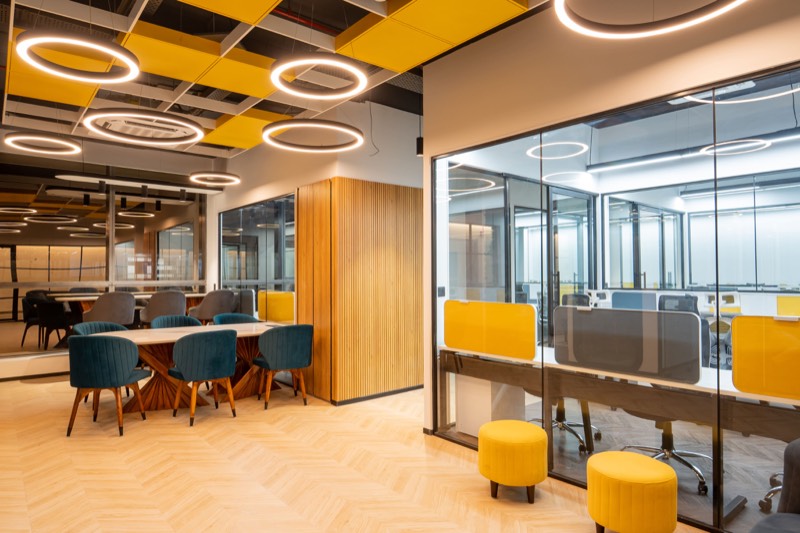
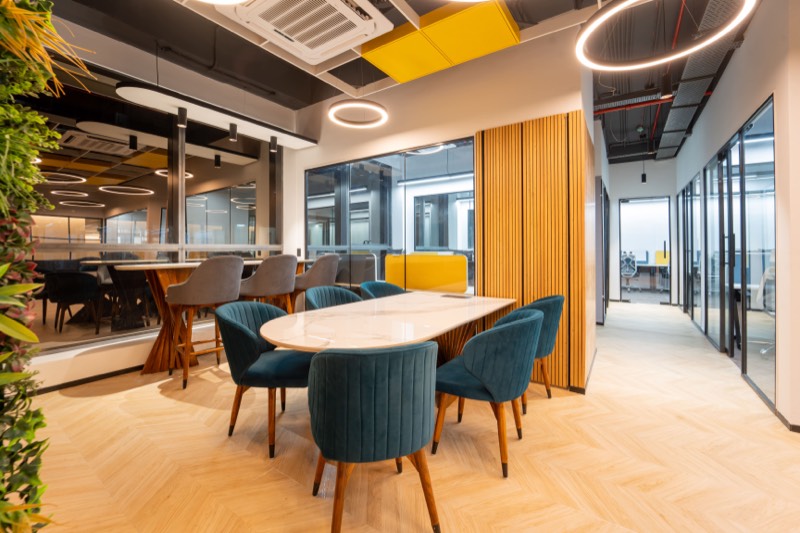
A first hire changes the office question from a place to work into a place that works. They need a proper desk, reliable internet, power that does not drop mid-call and somewhere to hold interviews.
In Pune, a dedicated desk at ByzBay starts at ₹9,590 per seat per month, so a founder and first hire cost from ₹19,180 a month for desks. A day pass starts at ₹590 if you want to test the commute before you commit.
Think about the first week as well as the first month. A new joiner needs a laptop, accounts, access to the workspace and a person to ask questions, and a ready desk makes a better first impression than a sofa.
- Dedicated desk: from ₹9,590 per seat per month.
- Private cabin for 2 to 10 people: from ₹10,859 per seat per month.
- Included in every ByzBay seat: dual fibre, UPS backup power, meeting-room credits, housekeeping on a checklist with photo proof, a member app for bookings, invoices and support, and your own access card; access hours are set by the membership and stated in the agreement.
- Laptops, a headset and a good chair for each person, which you buy separately.
What paperwork should exist before day one?
An offer letter is the minimum, but an employment agreement is better. It should cover role, pay, notice, confidentiality and, for engineers and designers, an assignment of the intellectual property they create for you.
Set up payroll and an expense process before the first salary date, not after it. Written leave and working-hours policies prevent most early disagreements, and a short document is enough.
Employee records need a home too. Keep signed contracts, identity and bank details and any policy acknowledgements in a secure, access-controlled folder rather than in someone’s email.
How do you budget the first year of workspace costs?
Work out a monthly workspace line and a one-off set-up line. For a founder and two hires on dedicated desks in Pune, desks are from ₹28,770 a month, or ₹3,45,240 a year, at list prices, plus laptops and any equipment.
Add a margin for growth, because your second and third hires usually arrive sooner than the plan says. Choose a workspace you can scale seat by seat rather than one that needs a new contract each time.
- Monthly: desks or cabin seats, plus any day passes for visitors.
- One-off: laptops, monitors, a headset and ergonomic basics for each person.
- Annual: accountant fees, registration renewals and insurance, as advised by your chartered accountant.
- Optional: startup discounts and cloud credits that lower the net cost.
What credits and discounts can lower your early costs?
Cloud providers run startup programmes with their own rules. AWS Activate, for example, lists conditions such as being pre-Series B, founded within the last 10 years and holding an AWS account on a paid tier, and Google for Startups runs a cloud programme of its own.
ByzBay gives companies incorporated within the last five years 10% off after a check of the incorporation certificate, plus up to $6,000 in partner credits from AWS, Google Cloud and Microsoft, where each partner decides eligibility and amount. To see a Pune centre and get a quote, book a site visit on byzbay.com or message ByzBay on WhatsApp at +91 8600 351 721.
Questions
Do I need an office before hiring my first employee?
Not necessarily a lease, but you need a registered address and a reliable place to work. Many startups use a virtual office for the address, from ₹560 per month at ByzBay in Pune, and a day pass or desk when the team meets. A fixed desk becomes sensible once someone works with you most days.
Can a startup use a coworking address for registrations?
Often yes, provided the provider can supply the address documents that the registration asks for. Check this before you sign, and confirm with ByzBay or any operator which documents come with the plan you choose.
What is DPIIT recognition and do I need it?
DPIIT recognition is a government certificate for startups up to 10 years old with turnover below ₹200 crore, with wider limits for deep-tech startups, applied for on the National Single Window System. The Startup India portal says the Ministry of Commerce and Industry charges no fee for it. You do not need it to hire or rent an office, but it can open tax and scheme benefits.
How much should a startup budget for a Pune workspace?
On ByzBay’s Pune starting prices, a dedicated desk is from ₹9,590 per seat per month and a private cabin from ₹10,859 per seat, so three people at dedicated desks come to ₹28,770 a month before discounts. A virtual office starts at ₹560 and a day pass at ₹590. Eligible startups get 10% off, which brings the three desks to ₹25,893 a month.
When should a founder talk to a chartered accountant?
Before registering for GST, signing the first employment contract or choosing a registered address. Rules on registrations, payroll and state requirements depend on turnover, location and business type, and they change over time. An hour of advice before the first hire usually costs less than correcting a missed registration later.