In short
A bare shell is an unfinished floor that you design, build, furnish and connect yourself. A turnkey office is ready to occupy, with interiors, furniture, internet and power backup in place. Turnkey usually means a fixed price and a stated move-in date; a bare shell gives full control but leaves the cost and delay risk with you.
Key takeaways
- A bare shell usually has the lowest rent per square foot, but design, interiors, services, furniture and IT are separate bills.
- A turnkey office trades some control for a fixed price, a fixed date and one party to call when something breaks.
- Get the full list of inclusions and exclusions in writing before you compare any two quotes.
- GST, deposits and lock-in periods apply to both routes, so compare total cost over the full term, not the headline rent.
What is the difference between a turnkey office and a bare shell?
A bare shell is a floor handed over with little more than the building structure, washroom cores and basic services brought to the floor. A warm shell adds some building services, often air-conditioning or lighting, though definitions vary by landlord. In both, the interiors are your job.
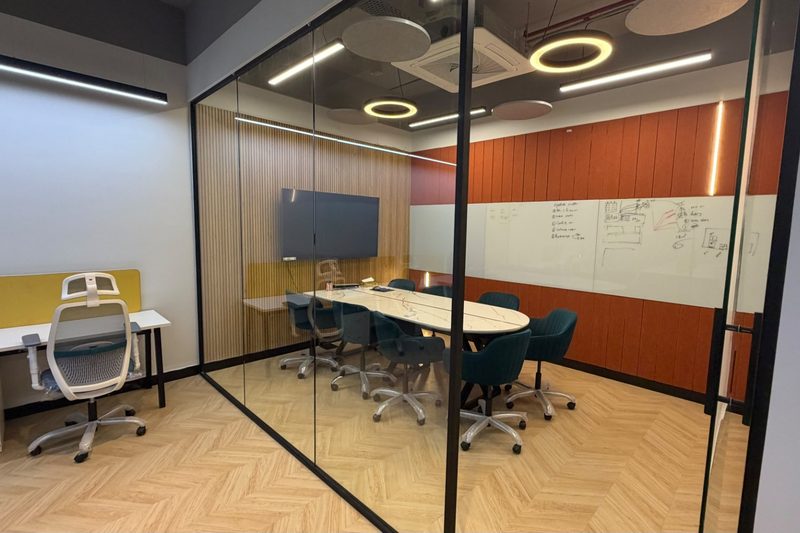
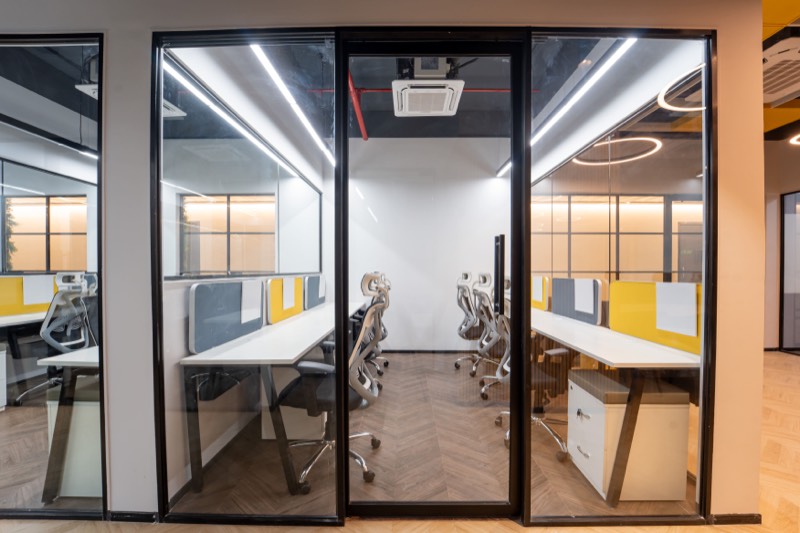
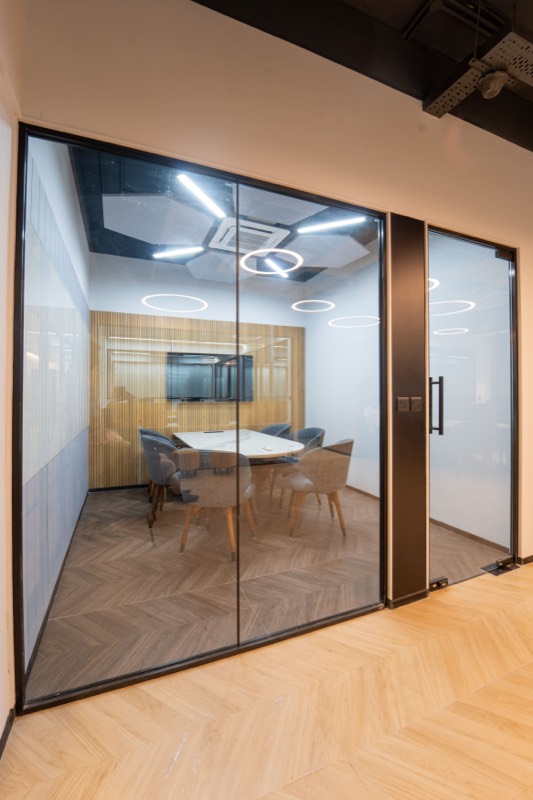
A turnkey office is the opposite end of the range. Partitions, ceilings, lighting, furniture, cabling and connectivity are finished before you arrive, so you collect the keys and start work.
Most real offers sit somewhere between the two, which is why the labels alone tell you very little. The only reliable comparison is a written list of what is included.
What does a bare shell leave for you to do?
You become the project owner. That means hiring designers, contractors and vendors, then coordinating them while your rent clock may already be running.
- Space planning, interior design and layout drawings.
- Civil and interior work: partitions, flooring, false ceilings and paint.
- Electrical, air-conditioning, lighting and fire-safety fit-out, with building approvals where the landlord or the authority needs them.
- Furniture, storage, pantry, reception and meeting rooms.
- Structured cabling, internet providers, Wi-Fi and power backup.
- Access control, CCTV, housekeeping and a way to handle visitors and mail.
What does a turnkey office include?
It depends on the provider, so ask for the list rather than assuming. At a minimum you should see finished interiors, furniture, power and internet, and a clear statement of who maintains each of them after move-in.
At ByzBay, every seat in Pune includes dual fibre, UPS backup power, meeting-room credits, housekeeping on a checklist with photo proof, a member app for bookings, invoices and support, and your own access card; access hours are set by the membership and stated in the agreement.
A turnkey fit-out for your own floor is a different product. ByzBay designs and builds any office under 10,000 sq ft in 75 days at a fixed price agreed before work starts. The planned programme is days 1 to 15 for design, days 16 to 65 for the build, and days 66 to 75 for snagging and move-in. Under ByzBay’s terms, the 75 days run from the day both sides sign off the final design and the site is handed over, and extend for changes you ask for, permits and approvals outside ByzBay’s control, and force majeure.
How do cost and timeline compare?
On a bare shell the rent line looks small, but the fit-out is a separate budget that varies widely with design, specification and the condition of the floor. Because the scope grows as decisions are made, the final figure often differs from the first estimate.
Timeline risk is just as real. Design, approvals, procurement and site work run one after another, and a delay in any step pushes back your move-in date and extends any period of paying rent twice.
Turnkey options move that uncertainty to the provider. A fixed price and a stated schedule are the two promises worth asking for in writing.
- Bare shell: rent, security deposit, design fees, fit-out contractor, furniture, IT and cabling, utilities set-up, plus your own project management time.
- Turnkey managed seat: one monthly fee per seat, with the fit-out and day-to-day services bundled in.
- Turnkey build on your own floor: a fixed price for design and construction, plus the lease on the space.
What taxes and lease terms apply either way?
Renting commercial property attracts GST at 18 per cent. Since 10 October 2024, when an unregistered landlord rents to a GST-registered tenant, the tenant pays that GST under reverse charge. Tenants under the composition scheme were taken out of this rule from 16 January 2025.
Lease terms matter as much as the rent. Check the lock-in period, the escalation clause, the security deposit, who restores the premises at exit, and whether your fit-out can be removed or reused.
A bare shell with a three-year lock-in and a rent-free fit-out period can still be the right choice for a large, stable team. A twelve-person team that may double in a year usually cannot afford that rigidity.
When does each option make sense, and what does it cost at a Pune seat rate?
Choose a bare shell when you need a very specific layout, such as a lab, a trading floor or a showroom, and you have people to manage the project. Choose turnkey when speed, a fixed price and fewer decisions matter more than custom detail.
For a sense of scale, a ten-person team in a ByzBay private cabin from ₹10,859 per seat per month pays from ₹1,08,590 a month, with every seat inclusion listed above. A twenty-person software team in a software team suite from ₹10,270 per seat pays from ₹2,05,400 a month. Whole floors are priced on request.
If you want to see a turnkey space before deciding, book a site visit on byzbay.com or message ByzBay on WhatsApp at +91 8600 351 721.
Questions
Is a turnkey office always more expensive than a bare shell?
Not necessarily. A bare shell has a lower rent line, but design, interiors, furniture, IT, project management and the delay risk are extra. Compare total cost over the full lease term, including deposits and exit restoration, rather than rent per square foot alone.
Who owns the interiors in a turnkey office?
That depends on the contract. In a managed seat, the provider owns and maintains the fit-out. In a design-and-build project on your own lease, you usually pay for it and own it, but the lease may require you to restore the space at exit. Confirm this before you sign.
Can a small team use a bare shell sensibly?
It can, but it is rarely the easy route. Small teams carry the same project risk as large ones with fewer people to absorb it, and a delayed fit-out hurts a small budget most. A managed or turnkey space usually suits teams that expect headcount to change within a year or two.
What should I ask a turnkey provider before signing?
Ask for a written inclusions and exclusions list, the lock-in and notice period, the deposit, how internet and power backup are provided, and what happens if the move-in date slips. Also ask which address documents you will get if you plan to use the space for registrations.